

Signs of High Quality Vintage Restoration in Designer Bags
Last Updated: November 21, 2026
Quick Summary
High quality vintage restoration preserves a bag's original character: grain stays visible, stitching matches in weight and tone, edge paint sits thin and smooth, and hardware wears evenly with crisp engravings. Good restorers document their work with before-and-after photographs, invoices, and parts records, and use reversible methods.
- Inspect six areas in order: structure, leather grain, stitching, edge paint, hardware, and interior stamps.
- A bag that fails two or more inspection areas needs a closer look at its restoration history.
- Fresh dye and heavy sealant leave a chemical sharpness, while well-restored leather smells like leather.
- Rank defects by consequence: cosmetic flaws are easier to accept than hidden structural repairs.
- Ask for before-and-after photographs, invoices, and a parts record naming original versus aftermarket components.
Table of Contents
- How to Assess Vintage Handbag Condition Before You Buy
- The Signs of High Quality Vintage Restoration
- Signs of Poor Handbag Repair That Lower Value
- Professional Restoration Versus Amateur Repair
- Vintage Designer Bag Authenticity After Restoration Work
- Questions to Ask When Buying a Restored Designer Bag
- Requesting Video Verification From LuxuryEliteFinds
- Frequently Asked Questions
How to Assess Vintage Handbag Condition Before You Buy
Spotting high quality vintage restoration starts with knowing what an untouched bag looks like. A restored vintage handbag has been cleaned, repaired, or refinished after years of use, and the quality of that work decides whether the piece holds its value or quietly loses it.
The vintage restoration question matters most to buyers who want a wearable piece without inheriting someone else's shortcuts. Condition grading is the foundation: an honestly graded bag tells you what was done, what was replaced, and what remains original.
A Repeatable Six-Area Inspection Checklist
Work through these areas in order and record what you observe. The goal is not a pass/fail verdict but a written record you can compare against the seller's description.
- Structure and shape, Set the bag on a flat surface. A bag that stands on its own base and holds its silhouette when empty is structurally sound. Slumping, leaning, or folding at the corners suggests collapsed reinforcement, stretched leather, or a lining that has lost its backing. Check the base corners first; that is where structure fails earliest.
- Leather surface and grain, Tilt the bag toward a window. Original leather shows natural grain variation, faint surface lines, and color that shifts slightly across panels. A refinish that erased the grain or left a uniform plastic sheen has removed the character collectors pay for. Run a fingertip across a seam; a quality refinish feels continuous, while a poor one catches where dye meets original finish.
- Stitching and thread, Compare thread color, weight, and tension along every seam. Original factory stitching has a rhythm: even spacing, consistent tension, thread that matches the leather's age. A restorer who re-stitched a panel should have matched thread weight and tone; a mismatch in sheen or thickness is a tell.
- Edge paint and glazing, Edge paint should sit thin, smooth, and follow the original curve without pooling or cracking. Thick, lumpy, or uneven edge paint often covers a repaired or re-cut edge. Look at the edge under raking light; defects hide in flat lighting.
- Hardware, Check plating wear, engraving sharpness, and screw heads. Plating should wear evenly with age, not in bright patches that suggest a cheap re-plate. Engravings stay crisp on genuine pieces; a softened logo often signals a replacement part. Turn every clasp, turn-lock, and zipper pull through its full range and listen for grinding or looseness.
- Interior and stamps, Inspect lining stains, zipper pulls, and the date or serial stamp. Lining replacements should use fabric of a similar weave, and interior stamps should remain legible. A stamp partially obscured by refinishing is a question to raise, not a detail to overlook.
A bag that fails two or more areas needs a closer look at its restoration history before you commit. Record which areas failed and why; that record becomes the basis for your questions to the seller.
Quality Standards by Bag Area
Use this framework to judge each zone against what good work looks like.
| Area | What quality looks like | What poor work looks like |
|---|---|---|
| Body and structure | Holds silhouette, even panel tension, corners intact | Slumping, leaning, collapsed corners, rippled panels |
| Leather finish | Visible grain, depth of color, slight natural variation | Plastic sheen, flat uniform color, grain erased |
| Stitching | Even tension and spacing, matched thread weight and tone | Pulled leather, angled stitches, mismatched thread |
| Edge paint | Thin, smooth, follows original curve | Pooling, cracking, thick coverage over repairs |
| Hardware | Even age wear, crisp engraving, smooth action | Bright re-plate patches, softened logos, grinding |
| Interior | Legible stamp, matched lining weave, clean but aged | Obscured stamp, mismatched lining, fresh glue smell |
Watch out: a bag can look excellent at arm's length and still fail the structure and edge-paint checks, which are the two areas most often hidden by presentation photography.
Verify the Claims, Not Just the Bag
A condition report is only as good as the evidence behind it. Ask for before-and-after photographs of every repaired area, invoices or work records from the restorer, and a parts record showing which components are original and which are aftermarket. A restoration timeline matters too: a bag restored in stages over years tells a different story than one refinished in a single undocumented pass.
When to Bring In a Specialist
Some assessments exceed what photographs and video can settle. If the bag is rare or collectible, or the restoration involved structural work, an independent inspection by a specialist familiar with that marque is worth arranging before purchase. Ask what the inspection covers, hardware function, stamp verification, structural integrity, and finish quality, and request the findings in writing.
The Signs of High Quality Vintage Restoration
High quality vintage restoration is invisible at arm's length and only reveals itself under close inspection. The work should preserve the bag's original character rather than erase it.
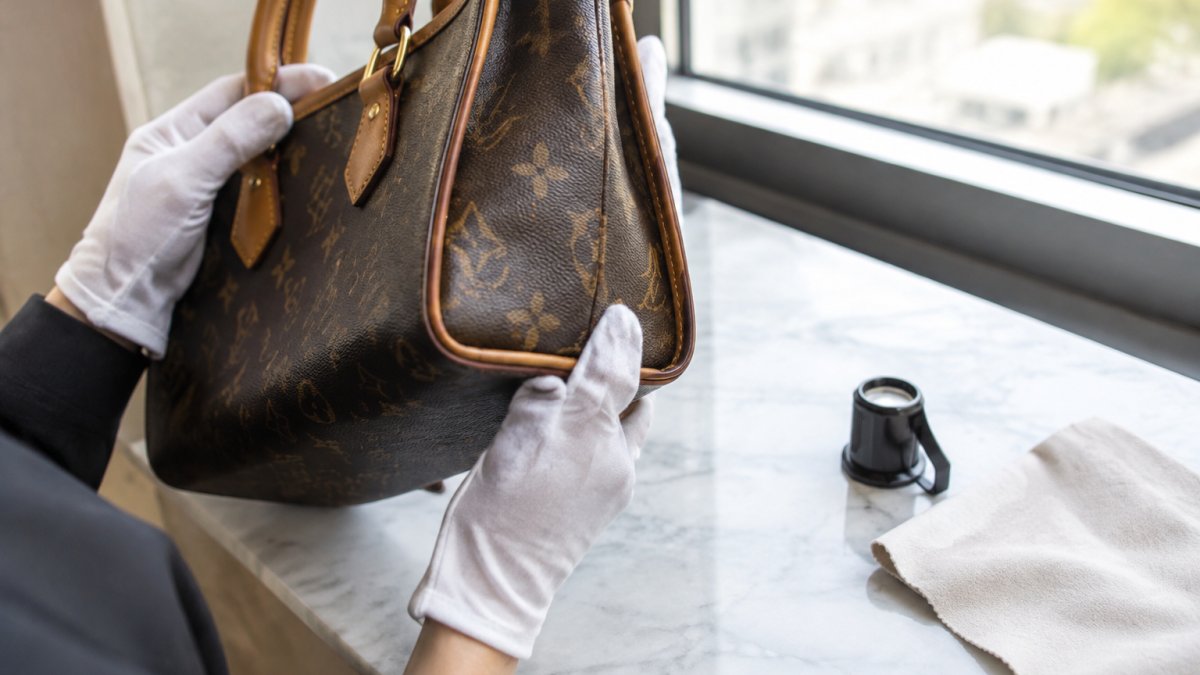
Stitching, Edges, and Hardware Consistency
Original stitching on a vintage Fendi Baguette or Dior Saddle follows a rhythm: even tension, consistent spacing, thread that matches the leather's age.
Edge paint should sit thin and smooth, following the original curve. Hardware plating should show age evenly, not in bright patches that suggest a cheap re-plate. Engravings stay crisp on genuine pieces; a softened logo often signals a replacement part.
Leather, Lining, and Finish Depth
Correctly conditioned leather feels supple and looks deep rather than flat. A quality refinish keeps the grain visible and the color slightly uneven in the way aged leather naturally is. Lining replacements should use fabric of a similar weave, and interior stamps should remain legible.
What most guides miss is the smell test. Fresh dye and heavy sealant leave a chemical sharpness that never quite fades, while well-restored leather smells like leather.
Signs of Poor Handbag Repair That Lower Value
Poor repair announces itself through shortcuts. Watch for these, and treat each as a reason to slow down.
- Glue visible along seams or edge joins
- Stitching that pulls the leather or sits at an angle
- Overspray on hardware, lining, or stitching
A vintage Fendi Gold Hardware Zucca Baguette shows how a well-presented piece should look: hardware finish consistent with age, stitching intact, and condition described plainly. Compare any restored bag against that standard.
Professional Restoration Versus Amateur Repair
The difference between professional restoration and amateur repair comes down to reversibility and documentation. A professional works to original specifications, keeps records, and uses methods a future conservator can undo.
| Factor | Professional Restoration | Amateur Repair |
|---|---|---|
| Materials | Matched leather, thread, hardware | Generic substitutes |
| Reversibility | Methods can be undone | Glue and dye are permanent |
| Documentation | Photos and records kept | None provided |
| Structural work | Hidden repairs done properly | Cosmetic cover-up |
| Long-term value | Preserved or improved | Reduced |
What most guides leave out is how to rank what you find, how to verify a seller's claims, and where originality should give way to usability. Those three questions decide whether a restored bag is a sound purchase or a future problem.
Rank Defects by Consequence, Not by Appearance
A cosmetic flaw and a structural one are not the same risk, even when they look equally alarming in a photograph. Sort what you find into three tiers.
- Cosmetic, low consequence, Surface scuffs, faint color variation, minor plating wear. These affect appearance but not integrity, and are the easiest to accept in a vintage piece.
- Functional, moderate consequence, Stiff zippers, loose hardware, a lining separated at a seam. These can usually be corrected, but they change how the bag wears and should be reflected in how you evaluate the piece.
- Structural, high consequence, Collapsed reinforcement, re-cut edges, glue repairs at stress points, obscured stamps. These affect both durability and authenticity, and are the defects most likely to be hidden by presentation.
Rank every defect before you decide. A bag with several cosmetic flaws and no structural ones is often a better purchase than a cosmetically perfect bag with one hidden structural repair.
How to Verify Restoration Claims
Seller descriptions are not documentation. Verify claims against evidence, and treat missing evidence as a finding in itself.
- Invoices and work records, Ask for the restorer's invoice or work order. It should name what was done, which materials were used, and when. A seller who cannot produce any record is asking you to trust a description.
- Before-and-after photographs, Request images of every repaired area, taken before and after. Photographs of the stamp, date code, and hardware engravings before refinishing are especially important, because refinishing can obscure the details authenticators rely on.
- Parts records, Ask which components are original and which are aftermarket. A restorer who replaced hardware should say so plainly and identify the replacement.
Watch out: a seller who answers condition questions fluently but cannot produce a single photograph or invoice is describing the bag, not documenting it. Treat the description as a claim to be checked, not a fact.
Balancing Originality, Safety, and Usability
Collectors sometimes treat originality as an absolute, but a wearable vintage bag has to function. The practical question is which replacements are acceptable and which erode value.
Replacements that preserve function without changing the bag's character, a new lining in a matching weave, a re-stitched seam with matched thread, a replaced zipper pull of the correct finish, are generally accepted when disclosed.
If you are still weighing whether restored vintage is worth buying at all, our guide on whether buying preowned luxury is worth it covers the value question in depth.
Vintage Designer Bag Authenticity After Restoration Work
Authenticity checks get harder once a bag has been restored, because refinishing can obscure the details authenticators rely on. Stamps, date codes, and hardware engravings are the first casualties of heavy restoration.
Our guide to spotting fake designer handbags walks through authenticity checks, and they apply doubly to restored pieces. A restorer who cannot show you the stamp before refinishing may have covered something.
Questions to Ask When Buying a Restored Designer Bag
Ask direct questions and expect direct answers. Vague replies are an answer in themselves.
- What was repaired, replaced, or refinished?
- Do you have before-and-after photographs?
- Were original parts used, and which ones are aftermarket?
A seller who answers all six without hesitation is worth continuing with. A pre-owned vintage Dior calf leather black Saddle bag listed with full disclosure of its restoration is easier to evaluate than one described only as "excellent condition."
Requesting Video Verification From LuxuryEliteFinds
Video verification closes the gap between photographs and reality.
At LuxuryEliteFinds, we offer personalized video quality verification so you can see a bag's condition before it ships. Our special request sourcing service helps locate rare vintage luxury pieces, and our packaging is meticulous.
The real challenge with restored vintage is not finding a beautiful bag; it is finding one whose restoration you can trust.
Frequently Asked Questions
What are the signs of a high-quality vintage handbag restoration?
Look for stitching that matches the original thread colour and spacing, edge paint applied evenly with no drips, and hardware that sits flush with no tool marks. Leather should feel supple with consistent grain rather than stiff or overly glossy. A careful vintage restoration preserves the bag's original proportions and hardware finish instead of replacing them with modern parts. Ask for close-up photos of corners, strap attachments, and interior seams, since these are the areas where rushed work shows first.
Can restoration affect a vintage designer bag's authenticity?
Restoration can affect authenticity when a repairer replaces original components with generic parts. A bag that has lost its original hardware, date stamp, or interior label can be harder to authenticate and may lose collector interest. Genuine vintage designer bag authenticity depends on the hallmark details staying intact, so ask which parts were replaced and keep any documentation from the restorer. Work that preserves original parts and only refreshes leather and hardware plating is far safer for value.
How can you spot poor repairs on a vintage handbag?
The clearest signs of poor handbag repair include uneven stitch tension, glue visible along seams, mismatched thread colour, and hardware that wobbles or sits at an angle. Look for overspray or dye on the lining, creased leather around a replaced zipper, and corners rebuilt with filler that feels hard to the touch. Any of these suggests a fast fix rather than considered work, and they often fail again within a season of regular use.
What questions should you ask when buying a restored designer bag?
Ask what was restored, who did the work, and which parts were replaced versus preserved. Request close-up photos of the interior, corners, and hardware, plus any receipts or restorer notes. Confirm whether the original dust bag, cards, or authenticity details are included. A seller who answers these clearly and offers video verification is showing you the bag's full history, which is exactly what you need to judge whether the restoration adds value or hides a problem.