

Understanding Luxury Bag Condition Grades: A Collector's Guide
Last Updated: November 2, 2026
Quick Summary
Understanding luxury bag condition grades means accepting there is no universal scale: each reseller, consignment house, and individual seller builds their own definitions, so a very good Chanel from one seller can be a good from another. Always read the seller's own definitions line by line and compare them against the photos.
- Pristine or brand new usually means unused with no visible wear and original packaging where applicable.
- Corners wear first on almost every bag, so they anchor most grading.
- Ask for daylight photos rather than studio flash, since flash hides scratches and discoloration.
- Grade the condition first, then verify authenticity through stitching, hardware engravings, date codes, and material feel.
- Odour, restoration history, and alterations rarely appear in grading descriptions.
Table of Contents
- Why Luxury Bag Condition Grades Are Not Standardized
- Pre-Owned Handbag Condition Grades: What the Labels Actually Mean
- Signs of Wear by Grade: Corners, Edges, Piping, and Handles
- How to Inspect a Vintage Designer Bag Before You Buy
- Your Vintage Handbag Inspection Checklist for Remote Buying
- Designer Bag Authenticity and Condition: Two Separate Checks
- How Condition Grades Affect Price and Resale Value
- What Grading Descriptions Do Not Disclose
- Frequently Asked Questions
Why Luxury Bag Condition Grades Are Not Standardized
Understanding luxury bag condition grades starts with one uncomfortable fact: there is no universal scale. A "very good" Chanel from one seller can be a "good" from another, and a "Rank A" Fendi Baguette means nothing until you know which platform's chart you're reading.
Condition grading is the practice of describing a pre-owned handbag's wear on a shorthand scale, usually from pristine to flawed. Each reseller, consignment house, and individual seller builds their own definitions. Some use letter ranks, some use numbers, some use words like "giftable" or "mint condition."
The result is predictable: two listings that look identical on paper can describe wildly different bags. A collector comparing a pre-owned handbag condition grade across platforms is really comparing two private languages.
Below, we break down what the labels actually mean, how to inspect a bag yourself, and where grades quietly mislead.
Pre-Owned Handbag Condition Grades: What the Labels Actually Mean
Most grading vocabularies borrow the same handful of words but define them differently. The safest approach is to read the seller's own definitions line by line, then compare them against the photos.
From Pristine to Flawed: Reading Grade Definitions
Pristine or brand new usually means unused, with no visible wear and original packaging where applicable. Mint condition sits just below: possibly tried on, no flaws found. Excellent and very good signal light signs of use, perhaps faint scratches on hardware or slight softening of structure. Good implies honest visible wear, often at corners or handles. Fair and flawed point to real damage: discoloration, cracked leather, stains in the lining, or a shape that has collapsed.
Watch out: "giftable" is a marketing word, not a grade. Treat it as "good enough to give," which tells you nothing about corners or piping.
Cross-Platform Grade Equivalency: A Comparison Table
Because no standard exists, use this as a translation guide, not gospel. Always confirm against the seller's written definitions.
| Common Label | Typical Meaning | What to Verify in Photos |
|---|---|---|
| Pristine / Brand new | Unused, no wear | Interior, hardware shine, packaging |
| Mint condition | No visible flaws | Corners, strap edges, lining |
| Excellent / Rank A | Minor signs of use | Scratches, slight structure softening |
| Very good / Rank AB | Light visible wear | Piping, handle darkening |
| Good / Rank B | Honest wear | Corner scuffs, interior marks |
| Fair | Noticeable damage | Cracks, stains, repairs |
| Flawed | Structural or cosmetic issues | Alterations, restoration history |
Signs of Wear by Grade: Corners, Edges, Piping, and Handles
Corners wear first on almost every bag, so they anchor most grading. On an excellent bag, expect sharp corners with maybe faint scuffing. On a good bag, expect rubbed corners and light color loss. On a fair bag, expect worn-through corners or exposed piping.
Piping and edges tell a similar story. Piping protects the bag's shape, and once it cracks, the structure follows. Handles darken with skin oils, and that patina is normal on vintage leather but should be disclosed. Hardware scratches and plating wear matter too, as does interior lining condition, which photos often skip. For a hands-on, brand-specific walkthrough, see this guide on checking vintage Chanel bag condition.
Odour is an easily overlooked part of condition. Musty or smoke smells rarely appear in descriptions.
How to Inspect a Vintage Designer Bag Before You Buy
Start with structure. Stand the bag up mentally: does it hold its shape, or does it slump? Then work through the components in order, because each one carries a different weight in the grade. For the full purchasing process, see the collector's guide to buying vintage luxury bags.
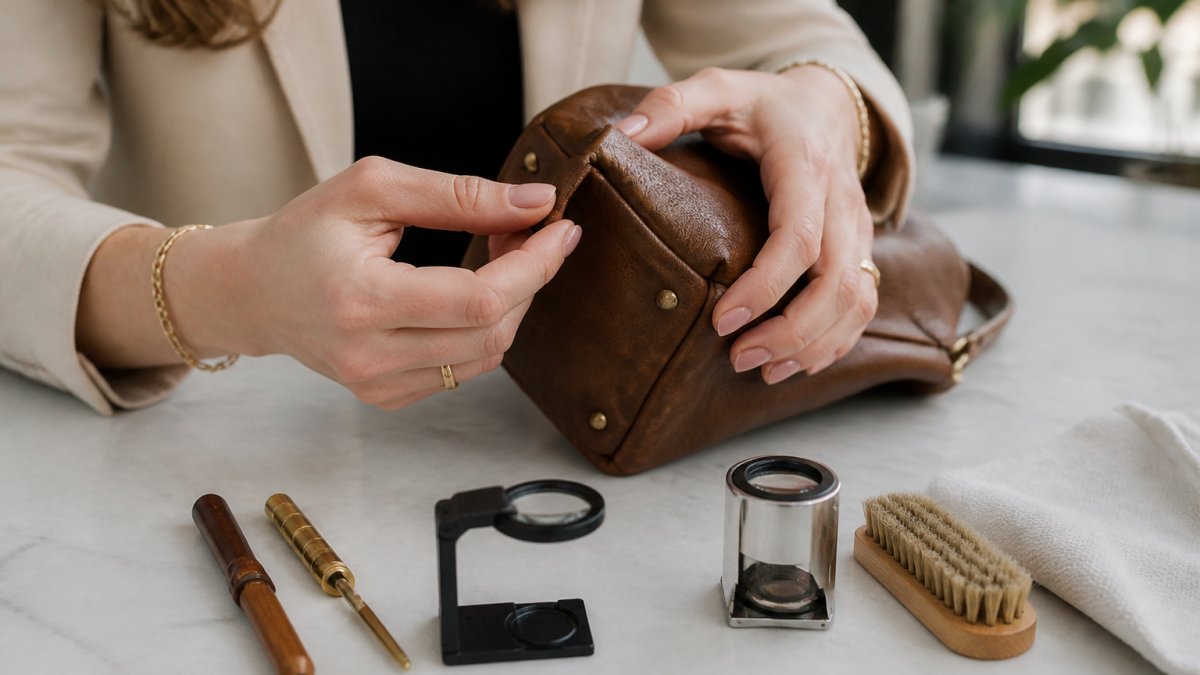
- Corners and edges - look for rubbing, color loss, and worn-through piping.
- Handles and straps - check for darkening, cracking, and stretched holes.
- Hardware - inspect scratches, tarnish, and plating wear on clasps and zips.
- Interior and lining - ask for photos of stains, pen marks, and peeling.
- Shape and structure - confirm the bag stands and the base is not warped.
- Odour and storage history - ask directly; it rarely appears in listings.
Condition Grading by Material and Construction
Material changes everything. Smooth leather shows scratches readily, while textured leather like Epi or pebbled finishes hides them. Patent leather can yellow and crack with age. Canvas and coated canvas resist scuffs but can crack at folds and corners. Suede marks easily and is hard to clean.
Construction matters too. Structured bags with firm frames show corner wear and shape loss dramatically, while slouchy silhouettes are more forgiving. A grade that ignores material and construction is only half a grade.
Your Vintage Handbag Inspection Checklist for Remote Buying
Remote buying rewards preparation. Ask for a consistent set of photos before you commit, and compare them against the seller's stated grade.
- Front, back, base, and both sides in natural light
- Close-ups of all four corners and the piping
- Handle and strap condition, including edge paint
- Hardware close-ups: clasps, zips, feet, and logo plates
- Interior lining, pockets, and any stamps or date codes
- Stitching detail along seams and edges
- A short video rotating the bag in daylight
Photo-Based Remote Inspection: What to Request
Ask for daylight photos, not studio flash, since flash hides scratches and discoloration. Remote buyers can also read the guide to buying rare vintage bags with confidence. Request a video that tilts the bag toward the light so surface wear shows. Then confirm the seller's return policy in writing before paying.
Designer Bag Authenticity and Condition: Two Separate Checks
Authenticity and condition are different questions, and a bag can pass one while failing the other. A genuine vintage Chanel can still arrive with cracked leather and a collapsed base. Conversely, a flawless-looking bag can be a counterfeit.
Grade the condition first, then verify authenticity through stitching, hardware engravings, date codes, and material feel. Never let a high condition grade substitute for authentication. Run the site's dedicated fake-spotting checks alongside your condition grading.
How Condition Grades Affect Price and Resale Value
Condition moves value more than most buyers expect. Condition generally influences how buyers value a handbag, though the size of any premium or discount depends on the individual piece. Readers weighing a graded bag can consult the investment guide to decide whether it is worth buying.
That is why grading language deserves scrutiny: a small upgrade in wording can carry a large premium.
What Grading Descriptions Do Not Disclose
Most grading descriptions omit the details that matter most. Odour, restoration history, and alterations rarely appear. A bag that has been recolored, re-stitched, or had hardware replaced can still earn an "excellent" grade if the seller only judges appearance.
Cleaning can change a bag's condition as well. A bag cleaned after listing photos were taken may look different on arrival. Ask whether the bag has been cleaned, repaired, or restored, and request photos taken after any work. At LuxuryEliteFinds, we provide personalized video quality verification, and we describe wear openly so buyers can judge a grade for themselves.
Frequently Asked Questions
What do luxury bag condition grades mean?
Condition grades are shorthand labels sellers use to describe wear, but no universal scale exists. Most systems run from pristine or brand new down through excellent, very good, good, fair, and flawed. Each seller defines those words differently, so a 'very good' bag on one platform may match an 'excellent' bag on another. Always read the written description and photos rather than trusting the label alone. Luxury bag condition grades are a starting point, not a guarantee.
What is the difference between excellent and very good condition for a designer bag?
In most pre-owned handbag condition grades, excellent means minimal signs of use: clean corners, intact piping, and hardware with only faint surface marks. Very good typically allows light visible wear such as slight corner rub or minor scratches that are not immediately noticeable. The gap between the two often comes down to how visible the flaws are in daylight. Ask for close-up photos of corners, handles, and hardware to judge which label fits the actual piece.
How can I assess the condition of a vintage handbag from photos?
Request specific angles: all four corners, edge piping, handle bases, hardware close-ups, interior lining, and the base of the bag. Look for discoloration, cracked leather, loose stitching, and shape loss. Ask for photos in natural light without filters. A vintage handbag inspection checklist works best when you compare the seller's photos against the written description. If an angle is missing, ask before you buy.
Does a handbag's condition grade include its interior and hardware?
It should, but not every seller grades interior and hardware separately. A bag can look excellent outside while the lining has stains or the zipper pulls show heavy scratches. Ask explicitly about the interior, lining, hardware, and odour. Reputable sellers disclose these details in the item description. If a listing only describes the exterior, treat the grade as incomplete and request more information.
How do repairs or alterations affect a designer bag's condition?
Repairs and alterations change both condition and value. Replaced handles, re-dyed leather, or aftermarket hardware should be disclosed, and they often lower resale value even when the work is tidy. A bag can be authentic and still carry replacement parts. Ask whether the piece has been altered, repaired, or restored, and request documentation if available. Undisclosed restoration is a red flag in any condition grade.
Can a bag be authentic if it has replacement parts or repairs?
Yes. Designer bag authenticity and condition are separate questions. A genuine vintage bag may have a replaced strap, new hardware, or professional restoration and still be authentic. What matters is disclosure. Ask the seller directly about repairs, replacement parts, and any cleaning or restoration work. Authenticity speaks to origin; condition speaks to wear and history. Judge each on its own evidence.
The real challenge is not learning the vocabulary; it is finding a seller who uses it honestly. LuxuryEliteFinds sources rare vintage pieces, verifies condition with personalized video checks, and ships each bag in meticulous packaging with signature requirements, so what you see is what arrives. Browse the collection or send us a special request, and get started with LuxuryEliteFinds to add a genuinely pristine piece to your collection.